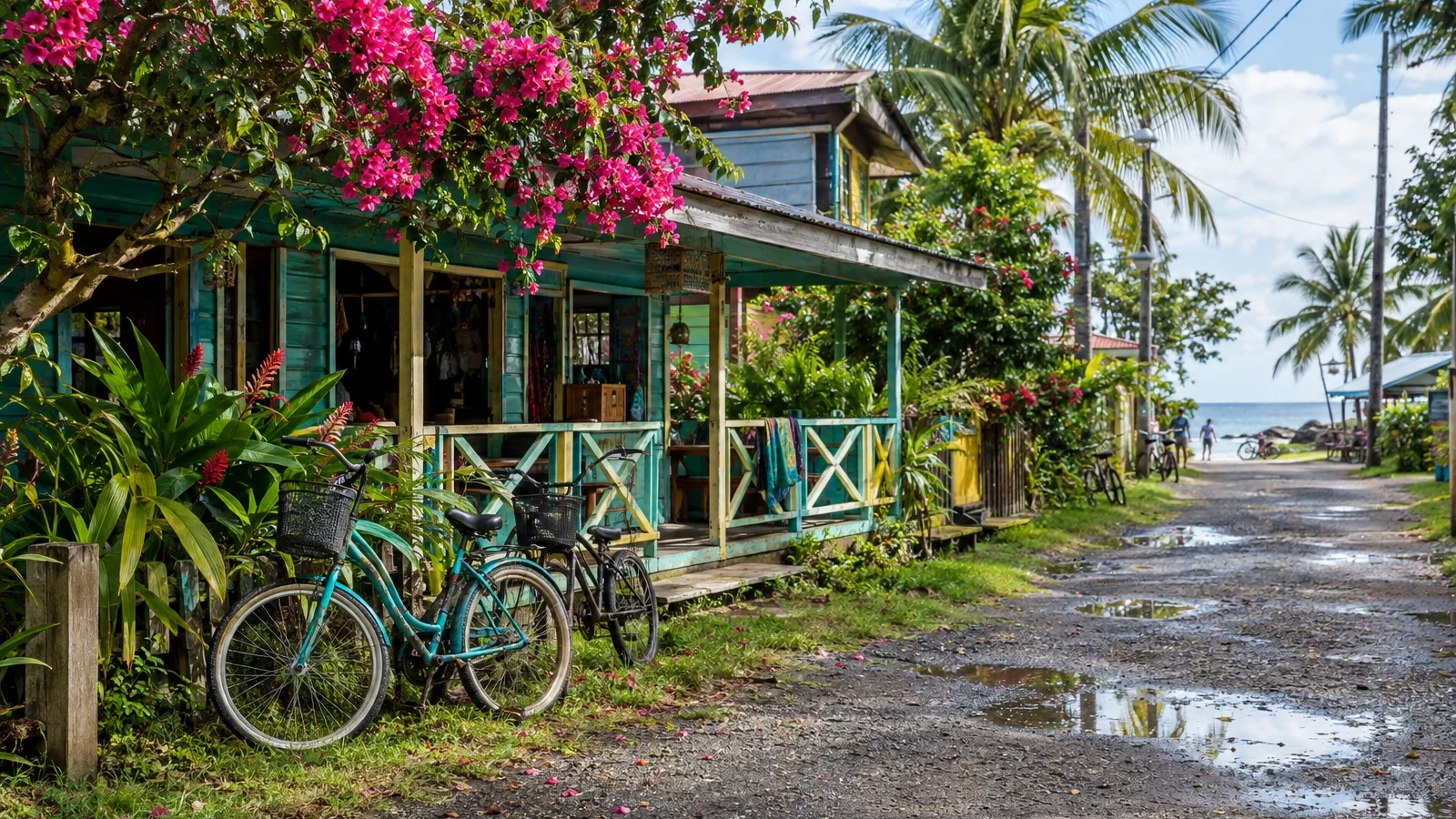


The Caribbean coast, where exuberant nature meets a laid-back way of life.
On Costa Rica’s eastern shore, the Caribbean coast reveals beaches, canals and villages with a distinctive identity. From Tortuguero to Cahuita, Puerto Viejo and Manzanillo, it invites visitors to discover nature as well as local flavors and rhythms.
Why visit the Caribbean coast?
The Caribbean coast offers a different side of Costa Rica. Dense vegetation lines the beaches, the villages have their own atmosphere, and Afro-Caribbean culture plays an important role in the music, cuisine and daily life of the southern coast.
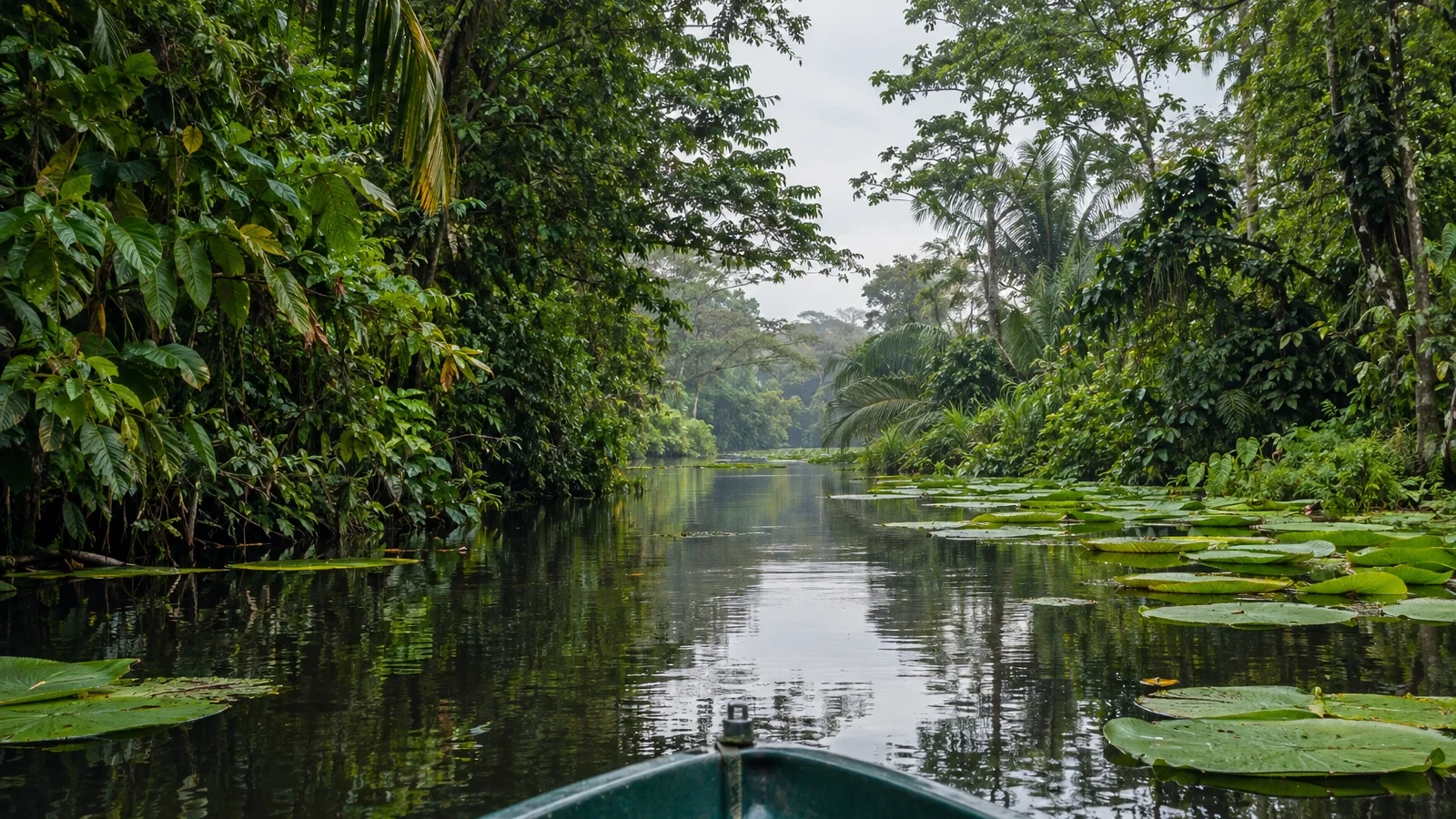
In the north, Tortuguero can be explored through its canals and wetland landscapes. Access is generally arranged by boat or plane, depending on the options available: this is a stop that deserves time rather than a quick excursion. Turtle watching, when possible, must respect the seasons and protection rules.
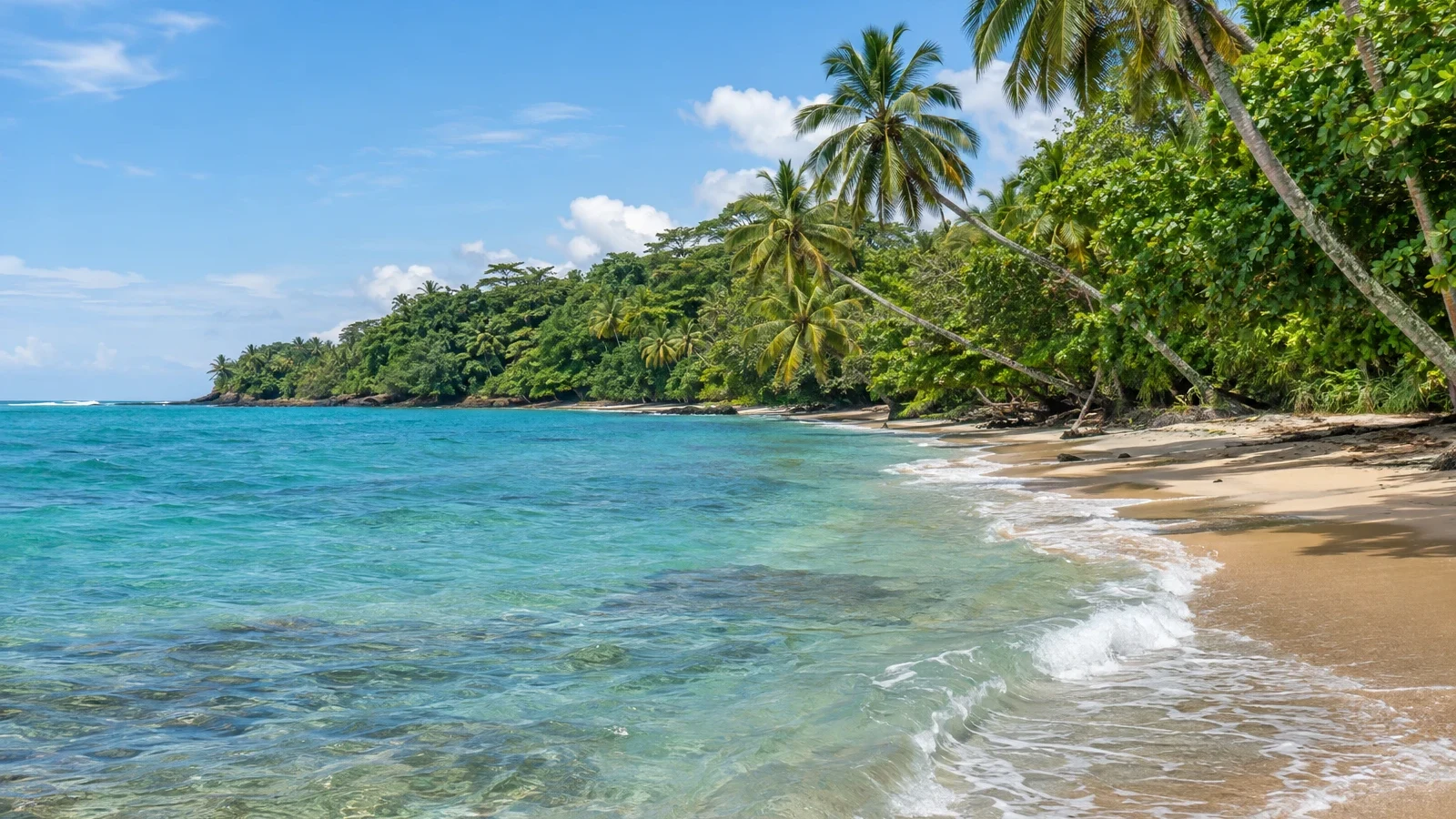
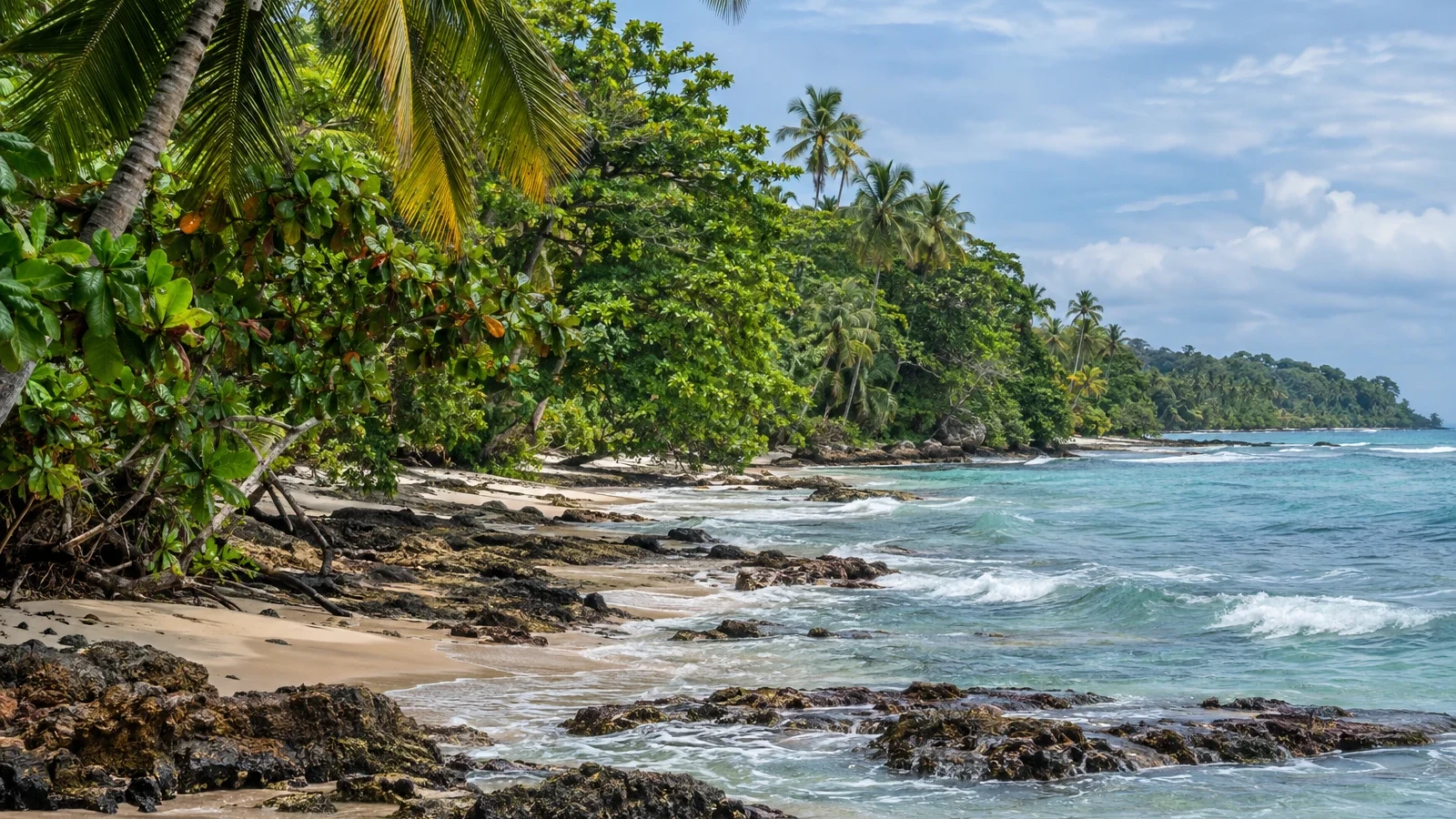
Farther south, Cahuita, Puerto Viejo and Manzanillo offer a variety of beaches, coastal trails and remarkable natural areas. Forest outings sometimes provide opportunities to see birds and mammals, with no guarantees and always from a safe distance.
The region suits travelers looking for a more relaxed atmosphere, with a mix of nature, culture and swimming when conditions are favorable. Its climate does not follow exactly the same calendar as the Pacific coast’s: it is best to stay flexible and check the local weather.
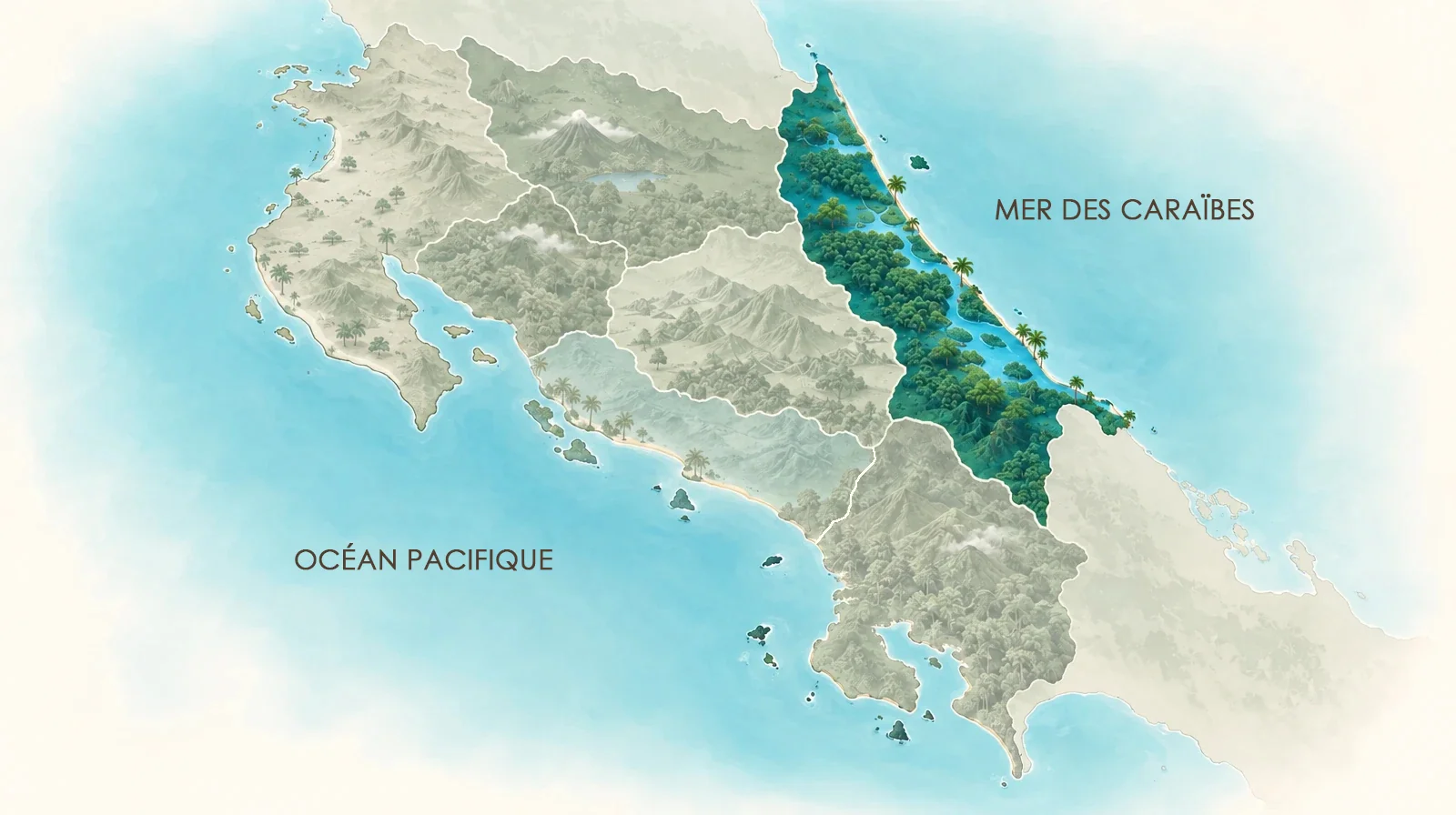
Where is the Caribbean coast?
The Caribbean coast runs along eastern Costa Rica, beside the Caribbean Sea. In our travel itinerary, it extends from the Tortuguero area in the north to the surroundings of Cahuita, Puerto Viejo and Manzanillo, near the border with Panama.
These two main areas have different access routes. Tortuguero is a canal destination that requires specific planning, while Cahuita and Puerto Viejo can be reached by road. To enjoy the entire coast, it is better to plan two separate stops rather than treat them as a single base.
Caribbean coast highlights
Between the canals of the north and the beaches of the south, the Caribbean coast offers experiences as varied as they are memorable.
What makes Tortuguero distinctive is its canals, wetlands and access, which is generally arranged by boat or plane depending on the option chosen. It is not an outing to squeeze in between two distant hotels simply because the map appears to show an accessible village.
On the Caribbean coast, Puerto Viejo de Talamanca has a cultural, musical and culinary identity distinct from that of the Pacific resorts. Visitors come for the beaches, villages, nearby forest and an atmosphere that invites them to slow down.
What to do in the region?
Tropical rainforest, the Caribbean Sea and cultural encounters: activities here are best enjoyed by taking the time to explore each area.
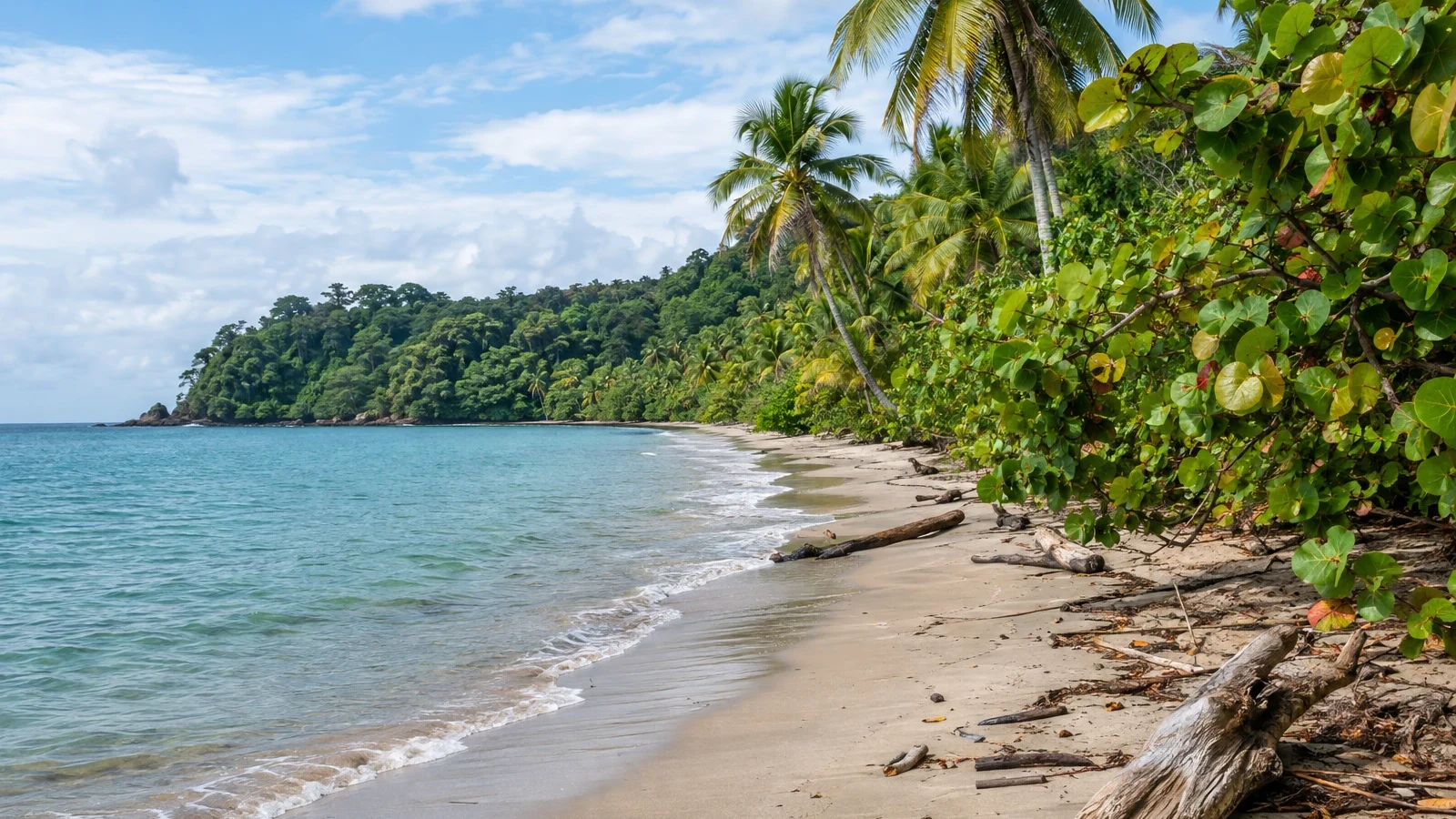
In Cahuita, Puerto Viejo, Punta Uva and Manzanillo, each beach has its own character. Some are better suited to a walk or a break in the shade, while others offer water activities when sea conditions allow.
Currents and swells can be dangerous. Ask for local advice before swimming or heading out, even if the water looks calm from shore.
Cahuita National Park offers a chance to explore a coastal forest and observe wildlife with patience. Trail conditions, entrances and rules change: check the park’s information before your visit.
Tortuguero offers a very different environment, made up of canals and wetlands. Guided excursions provide an opportunity to discover these habitats without disturbing the animals.
Afro-Caribbean culture can be discovered throughout the villages, in the sounds of the music, the crafts and the cuisine. Dishes made with coconut milk, rice, beans and local produce contribute to the coast’s culinary identity.
Taking the time to talk with residents and visit small local establishments allows you to go beyond the postcard image, while respecting local customs and people.
On the southern coast, you can easily combine a morning walk, a leisurely lunch and an afternoon at the beach. Rain sometimes calls for a change of plans, but not necessarily for staying indoors.
In Tortuguero, opt for one or two nights to enjoy the atmosphere of the canals and early-morning excursions. This pace also leaves more flexibility if the weather changes.
When to visit and practical tips
The Caribbean coast does not follow exactly the same dry-season / green-season pattern as the Pacific coast. Showers are possible throughout the year, with noticeable differences between northern Tortuguero and the southern coast.
On the Caribbean coast, the national tourism board describes two relatively less rainy periods, in February–March and September–October. These months are not guaranteed to be rain-free, nor are they a forecast for your trip: keep your activities flexible and check the local weather., but it is better to rely on local conditions than on a rigid calendar. For turtles in Tortuguero, check the seasons and permitted visits.
Cahuita, Puerto Viejo and Manzanillo can be explored using a combination of road travel, transfers, local buses and short trips, depending on where you stay. A car offers freedom, but it is not essential in every village.
Tortuguero requires separate planning: the final few kilometers are generally traveled by boat, with schedules to observe. Check which transfers are actually included before booking.
Cahuita appeals for its peaceful atmosphere and proximity to its park. Puerto Viejo offers more nightlife, restaurants and accommodation options. Places to stay near Punta Uva or Manzanillo suit those looking for a quieter setting.
For Tortuguero, choose accommodation that clearly specifies transfers, activities and meeting points. The location on the canals matters more than the straight-line distance.
Three nights on the southern coast allow you to discover several beaches, Cahuita and Puerto Viejo at a relaxed pace. Four or five days offer a real tropical break.
To include Tortuguero, plan an additional stop of at least one or two nights depending on your chosen activities, as well as the time needed for connections.