

Costa Rican cuisine: what to eat and where?
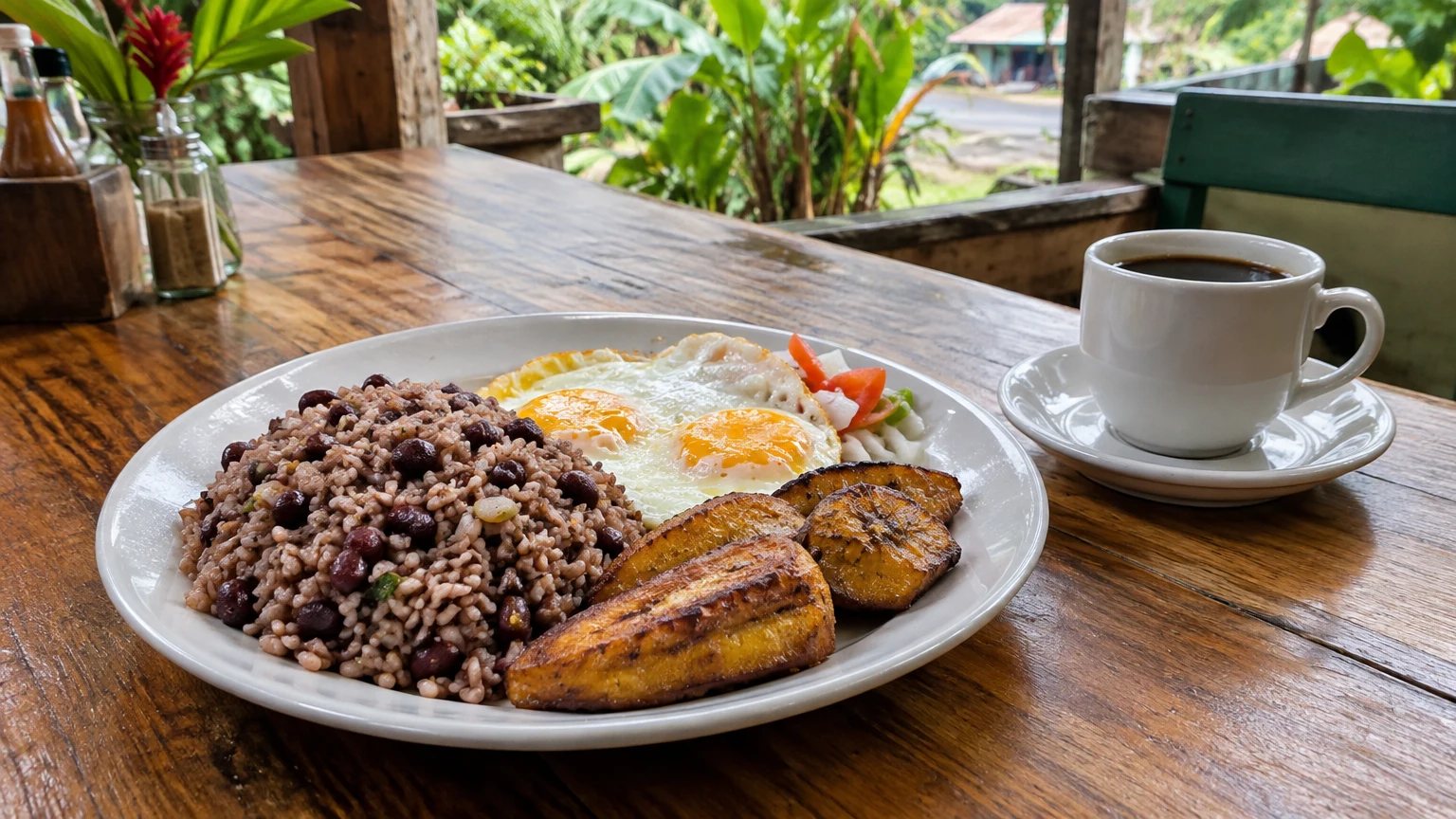
Costa Rican cuisine is not limited to a single dish. Gallo pinto, a preparation of rice and beans, often appears at breakfast.
Discovering Costa Rica also means exploring its food
Casado generally combines rice, beans, salad, side dishes, and a protein, depending on the offering. Specialties vary by region; on the Caribbean coast, Afro-Caribbean influences give coconut milk, spices, and seafood a different place in the cuisine.
Eating at a soda: a good idea
A Costa Rican “soda” is a small local restaurant, not a drink. It is often a good place to try a dish of the day and get a sense of everyday cooking. Look at the menu, opening hours, cleanliness, and how busy it is; a restaurant popular with tourists can also be good, while a small restaurant is not automatically more authentic or cheaper.
Adapting to everyone’s needs
If you have an allergy, intolerance, or specific dietary requirement, ask about the ingredients and how the food is prepared. Sauces, broths, and side dishes may contain unexpected ingredients. Do not assume that “meat-free” always means vegan or allergen-free. Keep a translated version of your request on your phone.
A realistic food budget
Compare the cost of an included breakfast, a soda, and a tourist restaurant for your dates rather than citing an unfounded “average price.” Keep a list of good places near your accommodations in your travel notebook; this saves you from getting back in the car every evening to look for a restaurant at random.
In practice: discovering sodas and specialties
A “casado” can be a convenient lunch option, but its composition varies from one restaurant to another. If you are looking for a dish without certain ingredients, ask about them clearly. On the Caribbean coast, try to discover the local cuisine without reducing its traditions to a single recipe. Note your favorite places in your travel notebook, along with their verified hours and days of operation.
Meal habits are also a matter of pace
A traveler who has lunch at a local soda and a simple dinner at their accommodation does not spend the same amount as someone who chooses tourist restaurants for every meal. To understand your budget, consider your actual habits. Check whether breakfast is included and whether groceries are available near your accommodation. This preparation encourages you to discover specialties without turning every meal into an unexpected expense.
Start with a few dishes rather than an encyclopedic menu
Casado is a composed plate whose side dishes vary by restaurant. On the Caribbean coast, rice and beans prepared with coconut milk in a local tradition offers another way to explore the cuisine. Ask about recipes and ingredients on site, especially if you have a particular dietary requirement.
| When ordering | What you can ask about |
|---|---|
| Trying a local dish | Ingredients and side dishes of the day |
| Choosing a dish without an ingredient | Whether it is actually present, preparation, and possibility of modification |
| Preparing for an early departure | Serving time and a takeout option if available |
| Comparing the meal budget | Currency, final price, and whether drinks are included or charged separately |
A soda is a local restaurant where you can discover everyday cooking; the name guarantees neither an identical recipe nor a similar price everywhere. Choose according to what you want to taste and the pace of your day, too. The budget is covered in “How much should you budget for food in Costa Rica?”, leaving room here for culinary discovery.
Five culinary discoveries to look for during your trip
Gallo pinto, a mixture of rice and beans prepared according to local customs, often appears at breakfast. Casado is a composed plate with several side dishes, the contents of which vary from one restaurant to another. Patacones, made from plantains, are another option to discover. On the Caribbean coast, rice and beans cooked with coconut milk in some traditions give meals a different flavor. And fresh fruit varies by region and season: simply ask what is available.
To taste these dishes, a soda, a restaurant serving local cuisine, is often a good place to start. Do not automatically assume it has a standard price or recipe. Look at the menu of the day and ask what goes into the dish, especially if you have allergies or dietary restrictions. A dish that seems simple may contain a sauce, broth, or side dish worth asking about.
The pleasure of eating is part of the itinerary. A lunch break in a village, a cold drink after a walk, or a shared breakfast can become memories as strong as an excursion. You do not need to reserve every table in advance to discover Costa Rican cuisine.
Frequently asked questions
 Numa Costa
The pen name under which I publish my articles and develop my editorial websites. Curious by nature, I enjoy understanding how things work, exploring everyday questions and making information easier to understand and use.
→ Learn more about the author