


Costa Rica in 3 weeks: Pacific and Caribbean itinerary
With three weeks in Costa Rica, you can explore volcanic landscapes as well as the Pacific and the Caribbean. That is not, however, an invitation to cross the entire country every other day. The best route includes bases of several nights and transitions planned around roads and seasons.
Organizing the twenty-one days around broad landscape types
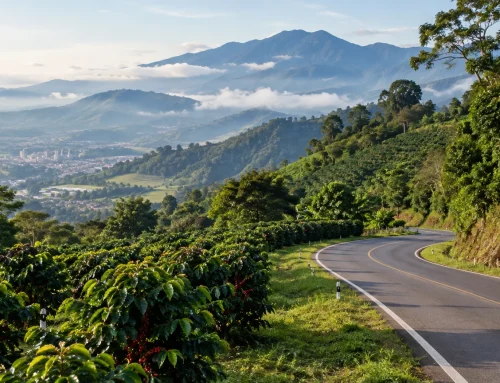
One coherent option is to start around La Fortuna, continue to Monteverde, explore a Pacific region, then cross over to Cahuita or Puerto Viejo before returning. Depending on the airport and the weather, the reverse order may be wiser. Rainy periods do not coincide exactly on the Pacific and Caribbean coasts, and this contrast can help guide your planning. Do not automatically try to include the Osa Peninsula, Tortuguero and the entire northwest coast: these additions require extra transportation and reduce the number of days available to enjoy the country.
Leaving room for travel, bad weather and spontaneous plans Mountain roads and legs toward the Caribbean sometimes take longer than their distance on a map suggests. Avoid stringing together a lodge departure, several hours on the road, a tightly timed visit and checking into a new place that same evening.
With twenty-one days, you can set aside one or two genuinely free days. They are not “wasted”: they allow you to spend more time on an activity you enjoyed, make the most of a sunny day or wait out heavy rain without disrupting the entire schedule.
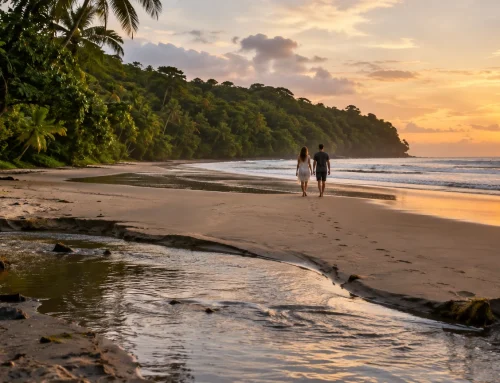
Two coasts, two different experiences The Pacific coast has varied areas, from Guanacaste to the central and southern Pacific. The Caribbean coast around Cahuita and Puerto Viejo offers a distinctive culture, cuisine and landscapes to explore. There is no point declaring one coast “better”: they suit different interests and schedules. Choose accommodations close to the activities you want to preserve time for. If a beach is your priority, check swimming safety at that specific spot rather than relying solely on how highly its beauty is rated.
A comfortable end to your trip
The return to the airport should be considered from the very first look at the map. If you finish on the Caribbean coast and fly out of SJO, allow enough time and possibly spend a final night near the terminal. For a flight from LIR, the arrangements may be different.
The best measure of success is not the number of places checked off, but the number of days you truly enjoy the ones you have chosen. The interactive travel notebook is there to help you build this itinerary without overloading it.
Three weeks: four sightseeing bases and transition nights
To combine both coasts, it is best to allow for several transition days. The following suggestion covers twenty-one calendar days and twenty nights; check how your own trip is counted. It does not include Osa, so as not to try to fit in every major region.
| Days | Base | Suggested nights |
|---|---|---|
| 1 | Arrival near SJO | 1 |
| 2–5 | La Fortuna | 4 |
| 6–8 | Monteverde | 3 |
| 9–12 | Central Pacific | 4 |
| 13 | Transition stop chosen according to transportation | 1 |
| 14–19 | Cahuita or Puerto Viejo | 6 |
| 20 | Base suited to the return to SJO | 1 |
| 21 | Departure | 0 |
This twenty-night scenario does not guarantee any connections. The transition between the Pacific and the Caribbean must be planned around actual transport links, not around a sightseeing day assumed to be available. A stop near SJO may help depending on your chosen transportation; its usefulness should be assessed for your own journey.
If the Caribbean is your priority, give it the longest block and shorten one of the two mountain stays. If you prefer a trip with less moving around, remove one base entirely. Three weeks allow you to slow down; they do not require you to fill in more of the map.
Planning the transition between the two coasts
Traveling from one coast to the other deserves more than an arrow on a map. From your chosen Pacific base, check transportation to the intermediate stop, then the connection to Cahuita or Puerto Viejo. If you use separate services, ask for the exact meeting places and times, baggage conditions and what happens if the first leg is delayed. Do not treat two independent bookings as a protected connection simply for convenience.
A transition night can give you some breathing room, provided it is in the right place for your onward journey. It does not require you to add a visit to San José. If you also want to explore the capital, give it proper time instead of squeezing it between two uncertain journeys. Conversely, a confirmed direct option may change the usefulness of that night; recalculate the twenty nights of your stay accordingly.
For the long Caribbean block, choose a base you enjoy spending time in day to day. You can explore another village or a natural area without changing hotels for a single night. If the activities you want are too far apart, compare two longer stays at different bases rather than a series of short stops.
Finally, keep your international return separate from your last excursion. Your accommodation details, luggage and transfers should be ready before that day. A three-week trip offers many possibilities; its success also depends on the ones you agree not to add. Visits to Osa or an extra stop should only be considered by removing something else and recalculating the connections.
Three weeks: where should you put your free days?
With three weeks, it is tempting to plot a large Pacific–Caribbean loop. This plan can be exciting, but travel times do not disappear just because the stay is longer. First identify the non-negotiable stops, then distribute rest days between them. For example, a few nights in the north around La Fortuna, a stop in the cloud forest, a longer stay on the Pacific coast and a stretch on the Caribbean side form one possible framework. Adjustments depend on airports, seasons and transfers.
If you travel in September or October, rainfall patterns on the Pacific and Caribbean coasts may lead you to favor one coast over the other. This does not mean the weather will be predictable day by day; it is another reason not to commit your entire schedule to weather-dependent activities.
Choose two or three days without transfers or reservations, ideally after the longest journeys. They allow you to repeat a walk that rain cut short, stay at the beach or simply enjoy a lodge garden. A successful three weeks does not mean twenty-one packed days: it means varied landscapes that you have genuinely had time to experience.
Frequently asked questions
 Numa Costa
The pen name under which I publish my articles and develop my editorial websites. Curious by nature, I enjoy understanding how things work, exploring everyday questions and making information easier to understand and use.
→ Learn more about the author