

Accommodations in Costa Rica with children: essential checks
For families, the right accommodation is one where everyone sleeps well, arrival is straightforward, and days stay simple. Check the actual sleeping arrangements, safety of access points, kitchen facilities, distances, and policies on charges for children before booking.
Sleeping space for four does not mean comfortable sleeping space for four
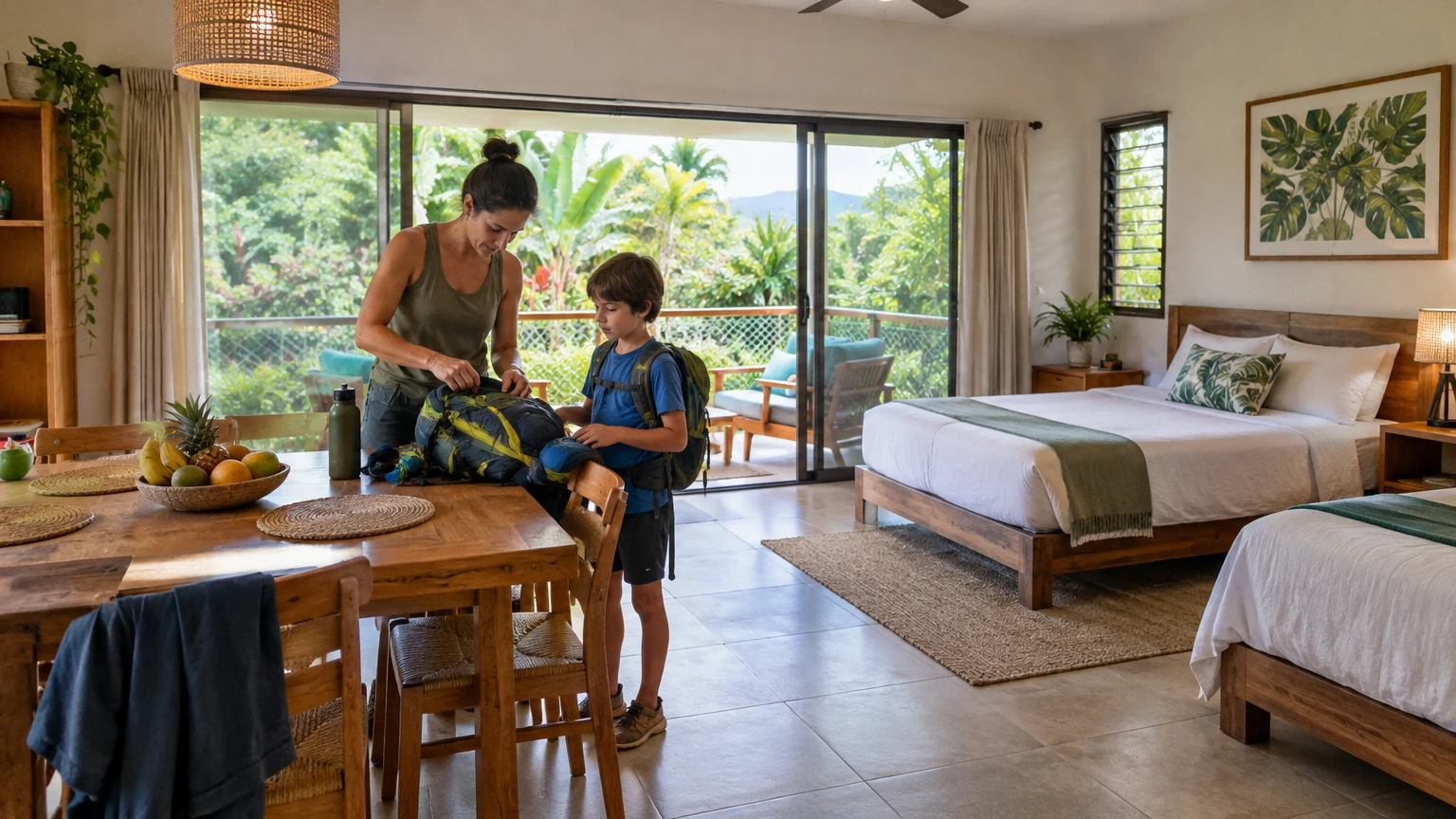
A “family” room may have a double bed and a sofa bed. What is comfortable for a four-year-old may be quite different for a teenager. Ask about bed dimensions, the number of separate bedrooms, and whether baby equipment is actually available. A photo of the extra bed can help avoid an unpleasant surprise.
Occupancy rules vary from hotel to hotel. A child may stay free if sharing a bed, but incur a charge if an extra bed is requested. Have the total price confirmed using each child’s exact age rather than relying on a general “children welcome” promise.
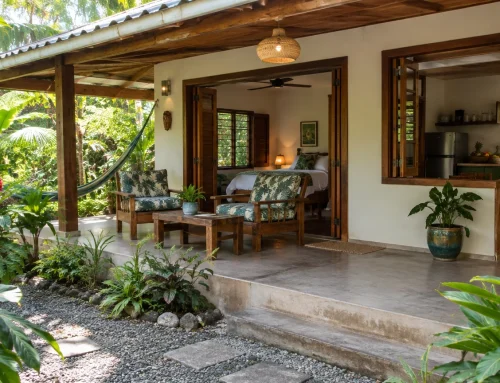
Pool, terrace, and proximity to water A pool without a barrier, a balcony with widely spaced railings, or a terrace opening directly onto a river calls for particular attention. Monkeys and other wild animals in the gardens are fascinating, but their presence means you should not leave food unattended or try to touch or feed the animals.
Ask for recent photos of access points, stairs, and fences if these are important considerations for your family. For beach days, staying at a hotel does not replace checking swimming conditions and currents at the exact spot you plan to visit.
Meals, laundry, sleep: the comfort we underestimate A refrigerator, laundry facilities, or a small kitchen can make a two-week trip run much more smoothly. After a day of sightseeing, being able to prepare a simple meal or dry shoes can change the mood for the whole family. Also check sound insulation and air conditioning, especially for children who go to bed early. Included breakfast is only useful if it starts at a time that works with your departures. Similarly, a nice pool adds little if you never have time to enjoy it. List three genuine priorities before opening comparison sites.
Limit stops and make arrivals easier
With children, staying three nights in one place can be more enjoyable than changing accommodations repeatedly. Allow for free time and, if your flight arrives late, choose a first-night stay that is easy to reach. Check in advance that an approved child seat is available for transfers and the rental car.
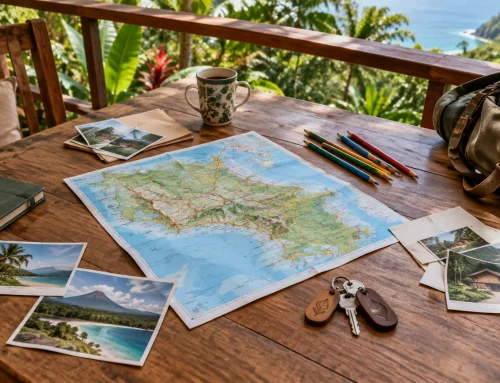
A flexible booking is sometimes worth a reasonable extra charge, especially if an itinerary depends on the weather or multiple modes of transportation. A travel journal can help you plan activities around two or three bases instead of changing hotels every day.
Ask about the room configuration, not just space for four
Describe exactly who is in your family and ask for a simple layout of the sleeping arrangements: shared bed, separate beds, sofa bed, or connecting room. A listing that accommodates four people may suit some ages much better than others. Have the booked configuration confirmed, not an example of a room at the property.
| Time of day | Detail that makes a difference to comfort |
|---|---|
| Returning from an excursion | A place to dry clothes and shoes |
| Dinner | A nearby meal option or a properly equipped kitchen |
| Bedtime | Noise, separation of spaces, and access to bathroom facilities |
| Early departure | Breakfast or an alternative |
| Time at the accommodation | Access to facilities appropriate for the children’s ages |
For a pool, balcony, or room on an upper floor, ask specific questions about access and safety measures. Do not assume an accommodation is suitable for your child because it is presented as family-friendly. The needs of a toddler and a ten-year-old cannot be summed up by the same icon.
Test a family room against the reality of a tiring day’s end
Accommodations often advertise space for “four people,” but that capacity may mean two double beds, a sofa bed, or sleeping areas spread across several spaces. Before booking, ask for a photo or floor plan of the actual configuration, specifying the children’s ages. Check whether the rooms connect, whether a balcony is secure, whether the bathroom is easy to access, and whether air conditioning is available in the room where each person will sleep.
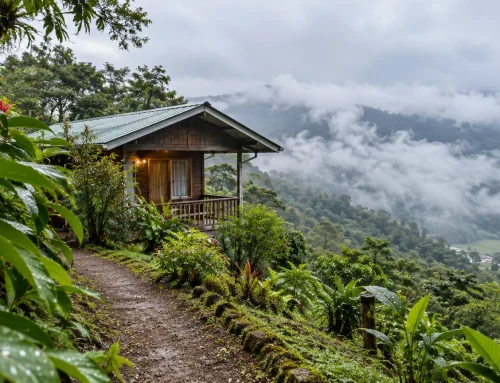
Another detail that changes everything: after a day on the road, who can eat nearby and at what time? With children, a pool without appropriate supervision or a lodge without an accessible dinner option can complicate a stay that looked perfect in the pictures. An accommodation surrounded by nature is not necessarily unsuitable for families, but you need to know about access conditions, any stairs, and safety rules around water and wildlife.
When traveling between places, favor days with one main activity and time to rest. An arrival toward the end of the day calls for a minimal plan: drop off your bags, have dinner, sleep. Simplifying that first evening often makes the next day’s excursions more enjoyable.
Frequently asked questions
 Numa Costa
The pen name under which I publish my articles and develop my editorial websites. Curious by nature, I enjoy understanding how things work, exploring everyday questions and making information easier to understand and use.
→ Learn more about the author