

Renting a car with children: car seats and safety in Costa Rica
If you are renting a car in Costa Rica with young children, the right seat should not be an afterthought added at the end of the booking. Costa Rican authorities require child restraints based on children’s age, height and weight. Reserve compatible equipment, check its condition and make sure it can be installed correctly in the chosen vehicle.
What Costa Rican authorities emphasize
In a communication from March 2026, Costa Rica’s Ministry of Public Works and Transport (MOPT) emphasizes that child restraints are not optional. It mentions infant carriers, car seats and booster seats with or without backrests, to be chosen according to the child.
In another official communication from 2026, the Traffic Police specify that children under twelve who are less than 145 cm tall must have an appropriate restraint. This wording is no substitute for the full regulatory text or for the safety rules related to each child’s physical characteristics. A teenager or taller child must, of course, remain properly restrained by a seat belt.
Rules can change, and particular situations require verification. The key point for travelers is not to assume that an airport transfer or a trip lasting a few minutes is an exception.
Rent a seat locally or bring your own?
Renting a seat with the vehicle means you do not have to carry it on the flight. But you need to confirm its availability, type and usage limits, not just check “child seat” on a list of options. A family with a baby, a preschooler and a preteen does not need the same equipment.
Bringing a seat you know can make it easier to check the fit, but it means checking with the airline about transport and the conditions for using it in the local vehicle. Equipment approved in one country is not automatically compatible with every car or with all local requirements.
Ask the rental company whether it provides the necessary attachment system, a seat with a harness or a suitable booster seat, and whether there is a replacement procedure if the equipment is damaged.
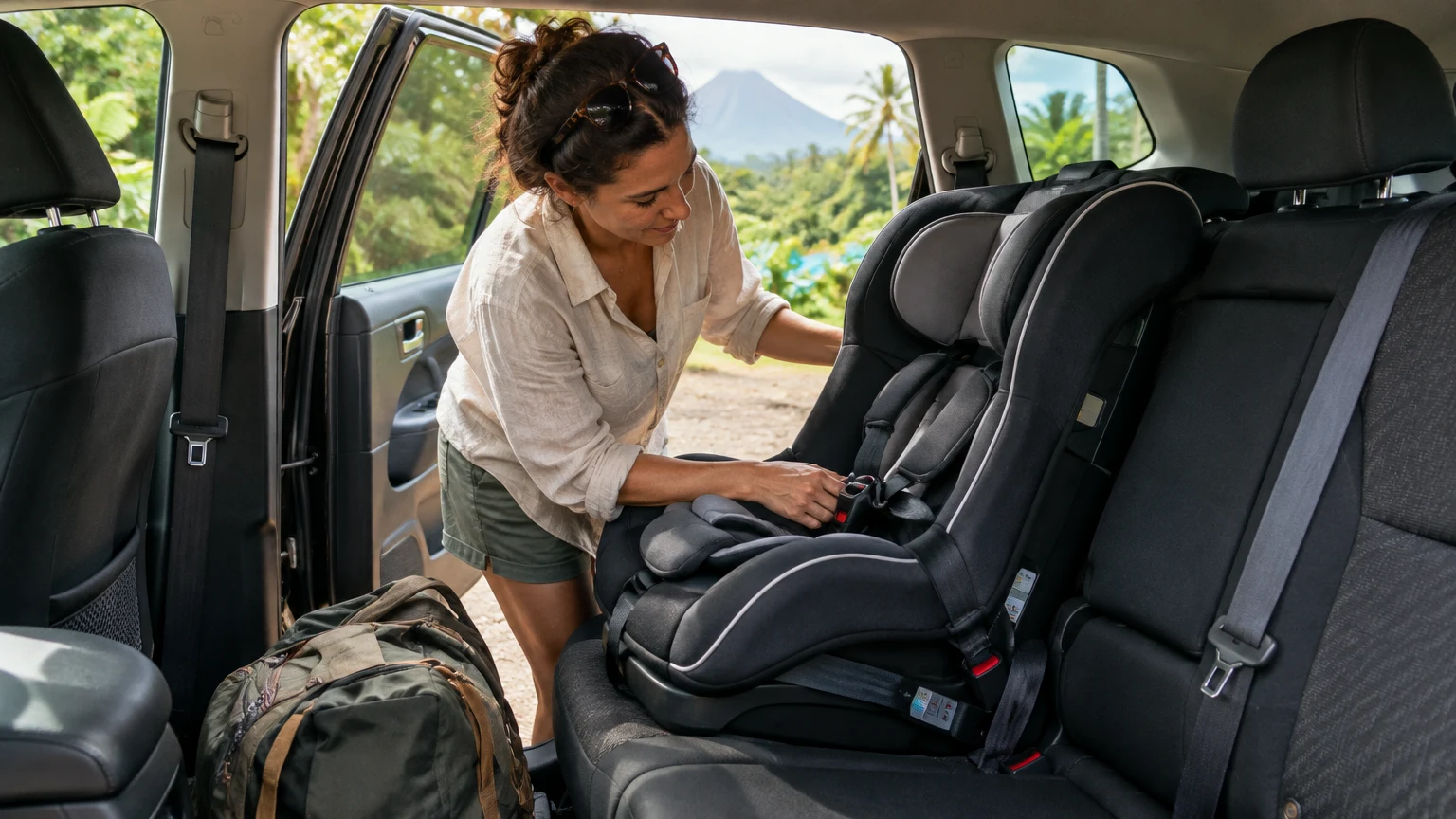
The test that matters: install the seats before loading the suitcases
At pickup, take a few minutes to examine the seat label, the instructions, the condition of the straps, the absence of visible cracks and the attachment points. Check compatibility with the back seat and your child’s size. If you have serious doubts about the installation, ask for qualified help or a replacement rather than setting off hoping it will hold.
Also check the space available for adults around the seat or seats. Two wide seats and an adult in the back of a small vehicle can make the trip uncomfortable or even compromise proper seat belt use. The category you choose must accommodate the passengers once the seats are installed, not just match the advertised number of seats. Once the seats are in place, check that they do not block access to the other seat belt buckles. Also test the luggage storage, without stacking unsecured heavy objects in the passenger compartment.
Driving with a family: think about pace rather than kilometers
On a mountain road or during the wet season, a fairly short distance can still make for a tiring trip. Plan reasonable breaks, accessible water and stops in safe places. Children do not benefit from an itinerary in which every day combines a long drive, a park and three activities.
Choose accommodations with actual travel times in mind. Two or three well-located bases can be more comfortable than six room changes in twelve days. Our Accommodations page and Itineraries guide help you consider these choices together.
Avoid leaving children alone in a parked vehicle, especially in the heat. Keep essential items and documents within reach of adults, without obstructing access to the seat or seat belts.
Before paying: six written confirmations
Note the number and category of seats, the stated weight and height limits, their availability at the counter, the final cost including taxes, the attachment method and the remedy if a seat is missing or unsuitable. An email exchange can save you an unnecessary negotiation when you leave the airport.
Also ask whether the shuttle provider offers the same restraint options as your rental company. The trip between the airport and the counter is already part of the journey and deserves the same attention. Should you reserve the seat before arrival? Yes, it is strongly recommended to confirm the category and availability, especially with several children.
Is a booster seat enough for all children?
No. The choice depends on age, height, weight and compliance with the manufacturer’s recommendations and applicable rules.
Prepare the seat based on your child’s characteristics
Give the rental company your child’s age, height and weight, then ask about the type of restraint provided and its usage limits. The words “child seat” can refer to different types of equipment. Current regulatory requirements and the appropriate restraint must be checked with the competent authorities and against the manufacturer’s instructions; a box checked on a booking does not replace these checks.
| Before departure | At pickup |
|---|---|
| Have the reserved restraint confirmed | Compare what is provided with what was requested |
| Check that it is suitable for the child | Check its condition and the necessary parts |
| Ask about the space available in the vehicle | Install it before loading the luggage |
| Plan a solution if the equipment is missing | Ask for a replacement or qualified help |
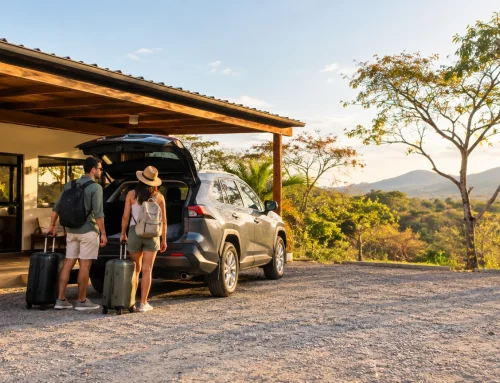
For a family, the best test is a practical one: seats installed, seat belts usable, adults seated and luggage stowed. If the trunk forces you to leave bags around the children, the category deserves reconsideration. Take the time you need before setting off; this is not something to sort out while driving.
The trunk test starts after the seats are installed
A vehicle advertised as having “five seats” can be uncomfortable with two child seats and several suitcases. Before choosing a category, check the usable width of the back seat, the accepted attachment method, the actual trunk capacity and the rental company’s terms for providing seats. If you bring your own seats, check their transport with the airline and their compatibility with the planned vehicle.
At pickup, install the seats correctly before loading the trunk. The rest of the trip should remain simple: water, necessary belongings and a small accessible bag. A family’s safety and comfort do not depend solely on the commercial category “family SUV.”
Frequently asked questions
 Numa Costa
The pen name under which I publish my articles and develop my editorial websites. Curious by nature, I enjoy understanding how things work, exploring everyday questions and making information easier to understand and use.
→ Learn more about the author