

Driving in Costa Rica: rules, speed limits, and mistakes to avoid
In Costa Rica, people drive on the right. For a short stay, a valid French driver’s license can generally be used for the duration of the authorized stay, but the driver must also comply with the rental company’s conditions. Once there, the main things are to follow posted speed limits, drive cautiously on secondary roads, and avoid driving at night when conditions are difficult.
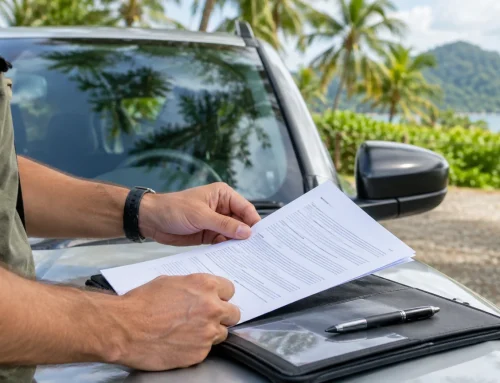
French driver’s licenses and documents to keep available
France Diplomatie states, in its Costa Rica section updated in September 2026, that a French driver’s license can be used for a short stay of up to 180 days, depending on the length of stay granted on arrival. This maximum is not automatic authorization to stay or drive for 180 days.
As a precaution, bring your original driver’s license, the rental agreement, the vehicle documents provided by the rental company, and an easily accessible form of identification. If your license was issued in another country, check the relevant rules: the guidance for French license holders does not automatically apply to all travelers.
Before leaving, also make sure you know the assistance and accident procedures set out in the contract. Keep useful phone numbers available offline, since a breakdown can occur in an area with limited connectivity.
Speed limits: read the signs instead of memorizing a national figure
Speed limits can change depending on the type of road, the presence of homes, schools, roadwork, and specially regulated sections. The reliable approach is to watch for signs and adjust your speed to the conditions; a figure found in an old blog does not authorize you to drive at that speed. Costa Rica’s Ministry of Transport regularly publishes reminders about speeding. In particular, it reports on enforcement checks and penalties for exceeding the limits in force. There is no need to reproduce fine schedules here, as they may change, to understand the message: slowing down is a safety decision.
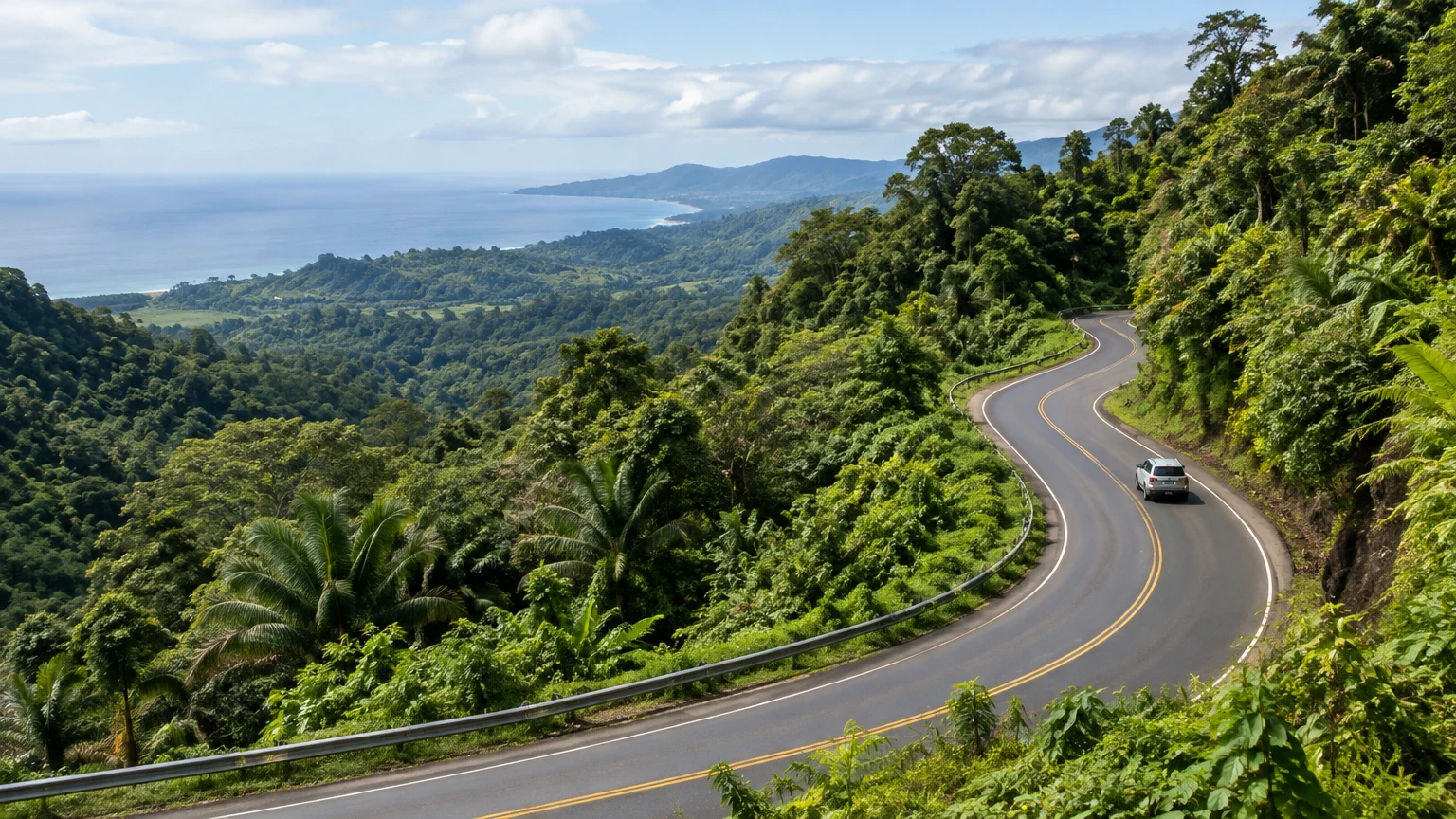
A relatively straight road can suddenly narrow, lead to a single-lane bridge, or pass through an area where pedestrians are present. Allow much more time than your GPS sometimes suggests.
Seat belts, phones, children: specific requirements Costa Rican authorities emphasize that seat belt rules apply to occupants in both the front and rear seats. Young children must be secured in an appropriate restraint when the rules require it; the category to choose takes their age, height, and weight into account.
MOPT also published a reminder in May 2026 about distractions while driving, including using a phone without an appropriate device. Prepare your route before setting off, place your phone in a suitable mount, and stop in a safe place to change the navigation.
If traveling as a group, divide the responsibilities: the passenger handles messages and stops, while the driver concentrates on the road. This small agreement avoids a lot of improvisation.
The features that surprise visitors most
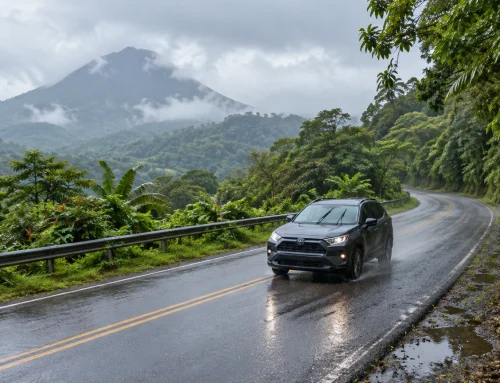
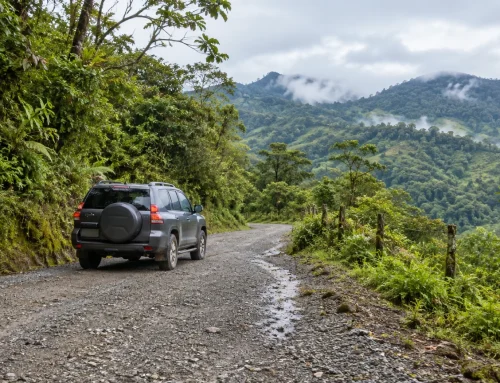
On some secondary roads, markings can be hard to see and shoulders narrow. US and British authorities report single-lane bridges, potholes, obstacles caused by vegetation, and damage caused by heavy rain.
Do not assume that the shortest route on an app will be the most pleasant or even the most passable. Confirm the final access route with your accommodation. If you encounter a road closure sign or rising water, turn around rather than mechanically following the indicated route.
If possible, avoid long drives at night outside urban areas, especially after arriving on a tiring flight. An extra stop is a reasonable choice, not a failure of planning.
Parking and protecting your belongings
Do not leave luggage in a parked vehicle, even if it is hidden under a rear cargo cover. British government guidance mentions thefts targeting vehicles and travelers. If stopping for a visit while in transit, choose a monitored parking lot when possible, or leave your luggage at your accommodation.
If you have a mechanical problem, reach a busy, well-lit area if possible. If a situation seems unusual or threatening, follow local instructions and contact the rental company’s assistance service. Do not try to resolve an uncertain incident alone on an isolated road.
Before returning the car, check the required fuel level and photograph the vehicle’s condition. Contract-related matters are covered on the Car page; here, the main focus is responsible driving. Accident or road closure: do not improvise In the event of an accident, get people to safety as far as possible, alert the relevant services, and call the rental company in accordance with its protocol. Local procedures may require you not to move the vehicle in certain situations, particularly when someone is injured or there is a disagreement about responsibility; refer to the instructions from the authorities and the insurer.
Do not tie up your phone searching for old numbers found on a forum. Before your trip, download and save the assistance contact details listed in the contract and a list of up-to-date useful numbers.
Costa Rica is best explored when the road remains a way to travel, not a race between two items on an itinerary. Give your journeys the time they deserve.
Is an international driving permit mandatory with a French driver’s license?
France Diplomatie states that a French driver’s license can be used for a short stay within the authorized period; always check the rental company’s requirements.
Can you rely on an app’s travel time estimate?
It is an estimate, not a guarantee regarding road conditions, roadwork, weather, or narrow bridges.
Prepare useful guidance for each driver
Before setting off, agree on a few group rules: no detours decided under pressure, a break available without having to justify it, and a change of plans if visibility or fatigue worsens. This arrangement prevents the driver from having to defend a cautious decision to passengers eager to arrive.
In Costa Rica, a location may be described using a landmark rather than an address familiar to a French traveler. Save the GPS point provided by your accommodation, its name, and a contact. A location found automatically on a map may correspond to the booking office rather than the entrance to the accommodation.
| When | Useful check |
|---|---|
| Before departure | Documents and journeys permitted under the contract |
| Before each leg | Exact destination and time buffer before nightfall |
| Approaching the accommodation | Final access route confirmed |
| In the event of an incident | Get to safety as appropriate for the situation and contact the relevant official services |
License and driving rules should be checked again with the authorities; do not treat a rental company’s policy as national law.
A simple driving rule: trust the signs, not your memory
Speed limits and local rules should be read on site and checked against up-to-date official sources. A general figure learned before the trip does not replace the signs on the stretch of road you are using. Do not check your phone while driving, and anticipate changes in road conditions, especially in the rain.
For journeys between regions, add a time buffer to navigation app estimates. Plan a safe stop to check the map or call your accommodation if the final access route seems unclear. A great trip is not measured by the number of kilometers traveled each day; arriving rested is often worth more than an hour supposedly “saved.”
Frequently asked questions
 Numa Costa
The pen name under which I publish my articles and develop my editorial websites. Curious by nature, I enjoy understanding how things work, exploring everyday questions and making information easier to understand and use.
→ Learn more about the author