

Where to see turtles in Costa Rica by season
There is no single “turtle season” that applies to every beach in Costa Rica. In Tortuguero, green turtles are particularly associated with the period from July to October. A useful calendar takes the location, species and visitor rules into account.
At Las Baulas, the official SINAC information sheet prohibits photographing turtles during regulated viewing. Do not plan a trip without confirming that viewing is currently allowed: the rules may change.
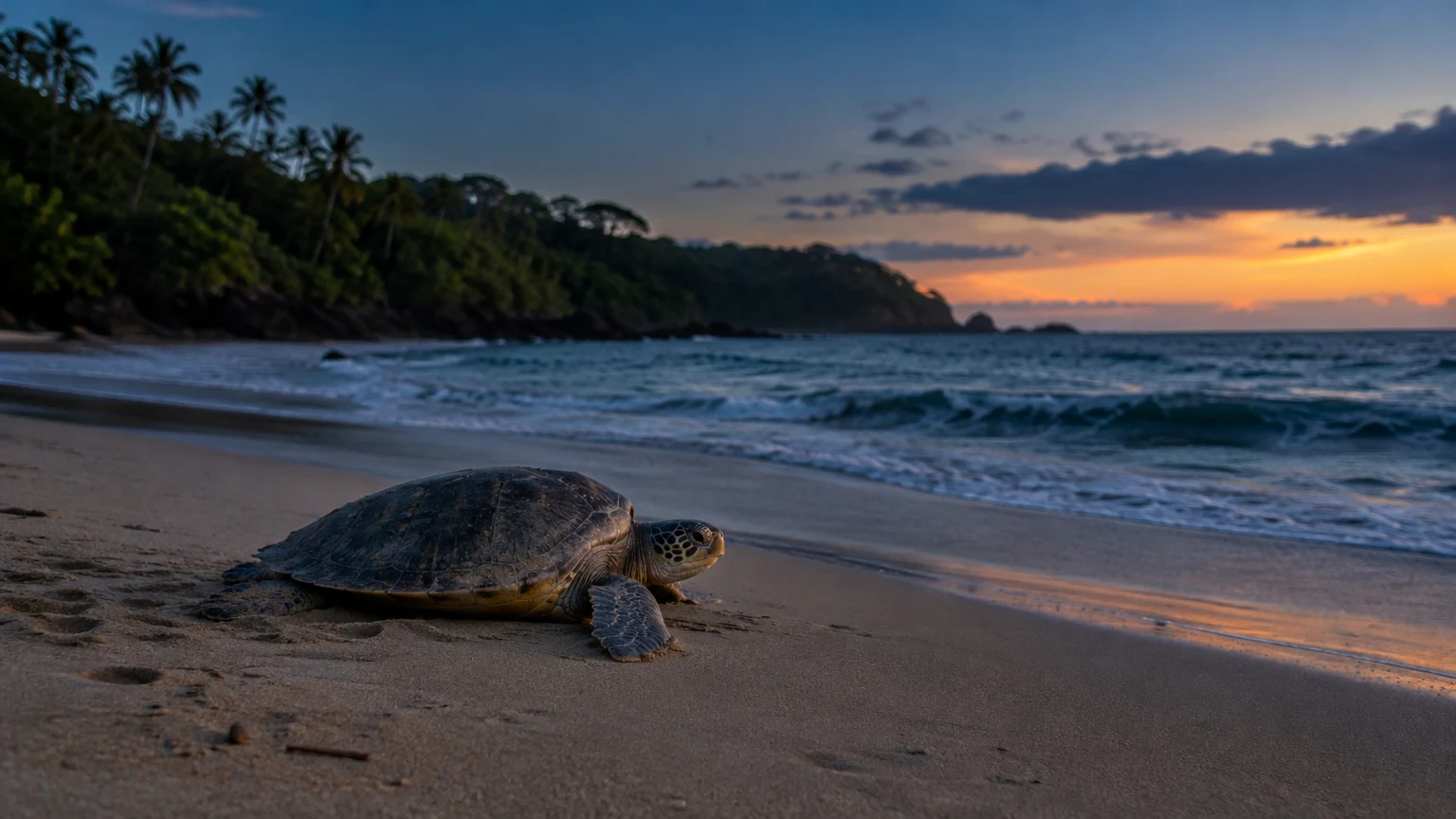
On the Pacific coast, some beaches such as Ostional are known for olive ridley turtle arribadas, whose dynamics vary. Leatherback turtles also use certain protected sites. The seasons advertised to tourists are likely windows, never guaranteed appointments.
During arribadas at Ostional, a local guide is required to access the area to watch turtles. Book through authorized associations and follow the refuge’s instructions: an arribada is a natural phenomenon, not a show with a guaranteed schedule.
Choosing a responsible viewing experience
A nighttime outing must comply with site rules, lighting restrictions and any requirements for authorized guides. No flash, no handling eggs or hatchlings, and no running toward an animal spotted on the sand. Viewing must stop if wildlife is disturbed. Some beaches strictly regulate access: check directly with the protected area’s management.
Tortuguero or Ostional?
Tortuguero can be part of a Caribbean trip focused on canals and rainforest. Ostional belongs to a different Pacific environment, where the timing of mass arrivals is not predictable like a concert schedule. First choose a destination that fits your itinerary and plan an alternative nature activity in case no turtles appear.
A good question for the operator
Ask what is included, who leads the outing, what rules apply to photos and what happens if there is no sighting. Keep these answers in your notes. Paying for a responsible excursion can still be worthwhile even if you do not see the animal you expected, provided you understood what you were booking.
In practice: planning a turtle-watching outing
A photo of a baby turtle in an advertisement tells you neither whether the season matches your dates nor whether viewing is allowed. Ask about the target species, the beach, the guiding rules and photography restrictions. If the operator refuses to answer, look for another activity. Booking an outing without a guaranteed sighting is more honest than promising your family a certain show.
Why “nesting calendars” can sometimes be misleading
They often combine different species, beaches far apart and variable natural phenomena. The period shown is a trend, not a schedule. Access and photography restrictions can also change. If turtle watching is the reason for your trip, contact the authorized operator and give your exact dates. If you are already in another region, avoid a huge detour based solely on an advertising promise. The best outing is one that respects wildlife, even without an encounter.
Planning a viewing experience around a species and a beach
The name of a beach does not guarantee that an outing is possible on every date. In Tortuguero, information from the site’s management describes specific rules for watching turtles nest; at Ostional or Playa Grande, check their own arrangements rather than assuming that one site operates like another.
| Before you pay | Expected answer |
|---|---|
| Which species and what phenomenon? | Nesting, hatching or another precisely identified observation |
| Which site and what date? | Area and current conditions |
| Who supervises the outing? | Guide or relevant organization as required by the rules |
| What are the instructions? | Permitted lighting, photography and behavior |
| What if the outing does not take place? | Rescheduling, substitution or cancellation |
For your stay, plan activities that are also worthwhile without turtles. A possible sighting can enhance a well-chosen base; it should not turn the entire itinerary into a gamble on a single evening.
Turtles: the date, location and rules matter more than the promise
In Costa Rica, turtle-watching sites do not all follow the same calendar. Tortuguero, on the Caribbean coast, and some Pacific beaches, particularly around protected areas in Guanacaste, have different species, seasons and supervision arrangements. Do not confuse a favorable season for certain sightings with a guarantee of witnessing nesting or hatching.
To choose an outing, first look for the relevant conservation site, then the rules established by its managers. Choose an authorized guide when required, a reasonably sized group and an approach that respects darkness and the animals’ behavior. Flash photography, unplanned approaches and contact with turtles can disrupt reproduction; strictly follow the instructions of the authorized operator and the park.
With a child, prepare for the possibility of seeing nothing. An evening on the beach can still be a meaningful encounter with nature, but it should not be treated as a show to demand at all costs. Accepting uncertainty is part of traveling respectfully.
Frequently asked questions
 Numa Costa
The pen name under which I publish my articles and develop my editorial websites. Curious by nature, I enjoy understanding how things work, exploring everyday questions and making information easier to understand and use.
→ Learn more about the author