

Costa Rica beaches: how to choose for swimming and surfing?
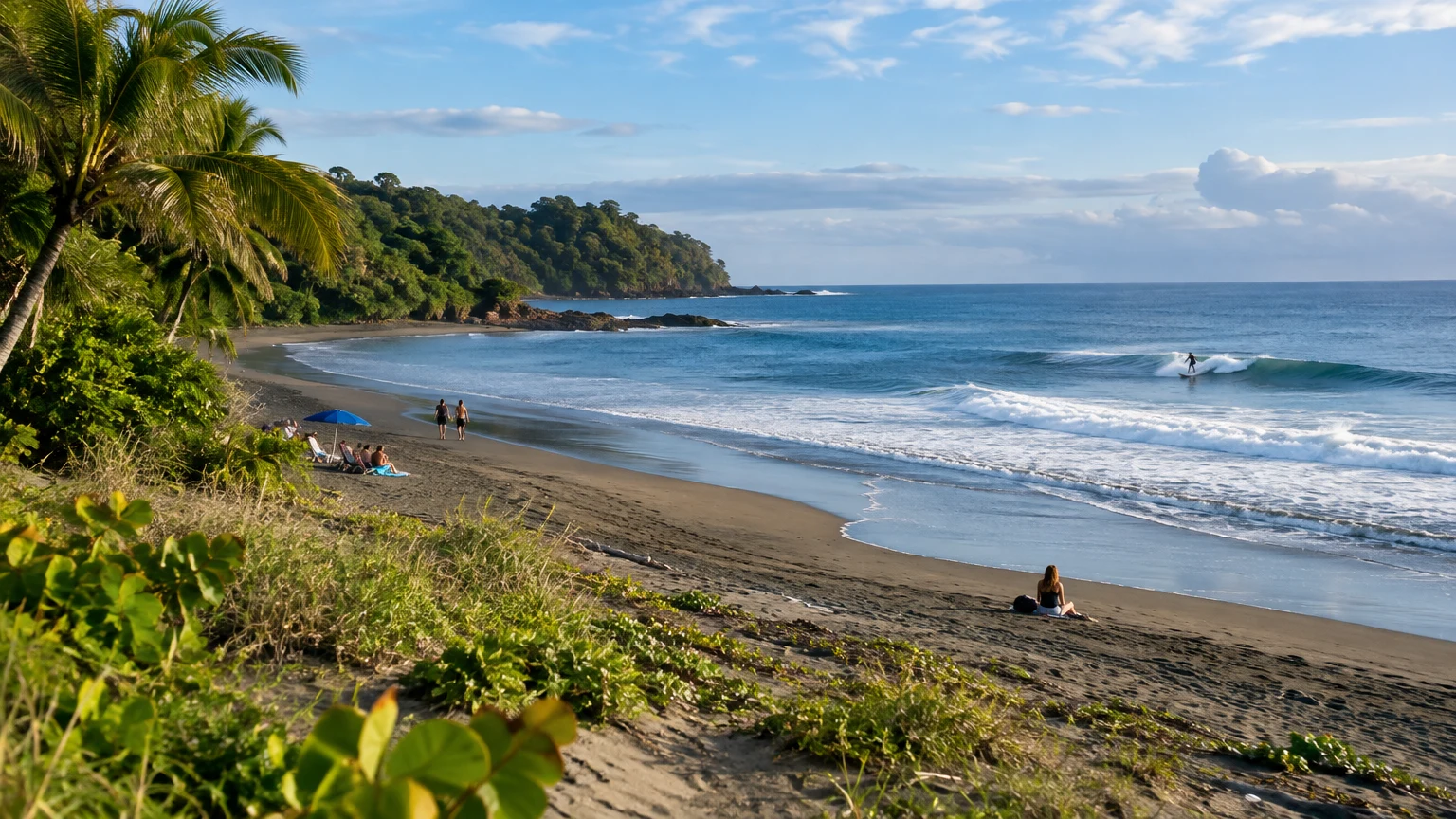
Costa Rica has beaches with very different characteristics: long stretches along the Pacific exposed to ocean swells, smaller, more sheltered bays, Caribbean beaches bordered by forest, and areas popular with surfers. Do not assume swimming is safe based on the color of the sand.
A pleasant beach is not always a beach for swimming
Rip currents, swells, and local conditions require constant vigilance; flags and warnings on site take priority.
For swimming, check the day’s conditions A relatively calm cove can become dangerous depending on the weather, tides, or presence of currents. Ask lifeguards for advice when they are present, as well as reliable local sources. With a child, do not simply rely on an accommodation listing that says “family-friendly beach”: check the slope, waves, access to the water, and distance from your accommodation.
For surfing, choose according to your level Tamarindo, Guiones, and certain areas of the Caribbean coast are known for surfing, but a spot’s character changes depending on the swell and tide. Booking a supervised introductory lesson is not the same as planning an independent session for an experienced surfer. Ask whether equipment, insurance, and transportation are included, and whether the provider can adjust the choice of beach to the day’s conditions.
Compare two beaches wisely
Add two pieces of information to your notes that are more useful than “beautiful”: whether swimming is possible according to local advice and which services are actually within walking distance. A large parking lot, nearby restaurants, or an easy journey may matter more than an impressive aerial photograph.
For more advice, the Itineraries guide provides additional guidance.
In practice: alternating beach time and water activities
Two travelers staying at the very same hotel in Tamarindo can have completely different vacations: one takes surfing lessons, while the other mainly wants a peaceful swim. Before booking, check where the recommended swimming areas and surf schools are located. Distinguishing between activities and safety helps avoid lazy recommendations such as “the perfect beach for everyone.”
A practical table for choosing between two beaches
Note their exposure to swells, access, availability of services, surfing opportunities, and swimming safety according to local guidance. A beach that is extraordinary for photographs may be impractical for a family. A beach with plenty of facilities may suit someone traveling without a car, but not appeal to a couple seeking peace and quiet. Do not rank beaches by abstract beauty: travelers’ constraints are just as important as the scenery.
Compare beaches by intended use, not just by photo
To make your choice, associate each name with an intended activity and a local check. Tamarindo may appeal to those looking for services and surfing lessons; Playa Grande also calls for consideration of its protected environment; Conchal requires planning access from Brasilito; Cahuita combines a village stay with exploring the coast. None of these examples guarantees suitable swimming conditions on the day of your visit.
| Intended use | What to check |
|---|---|
| Swimming peacefully | Conditions on the day, warnings, and permitted areas |
| Learning to surf | Instruction and an area suited to your level |
| Spending time with children | Shade, services, access, and the return journey |
| Walking and observing | Permitted route and tide, if relevant |
| Getting by without a car | Accommodation address and actual journeys |
Also choose an alternative that does not depend on the water. A beach can still be pleasant for walking or enjoying the scenery when swimming is not advisable. This possibility matters more than a ranking that claims to identify the country’s best beach.
A beach for swimming is not necessarily a beach for surfing
Costa Rica has coastlines on two oceans and very different beaches. A beach valued by surfers for its waves is not automatically suitable for a peaceful family swim. Conversely, a more sheltered bay may be suitable for relaxing, but currents, waves, and tidal conditions change. Do not label a beach “safe” based solely on a photograph or an old review.
To choose your base, ask yourself what you want to do each morning: surfing lessons, a walk by the water, a boat trip, or simply reading in the shade. Tamarindo, Sámara, Manuel Antonio, and the beaches around Puerto Viejo do not offer the same day-to-day experience. A beautiful secluded beach may also require more logistics than a bay near restaurants and accommodation.
Before entering the water, observe the conditions, respect the signs, and ask a knowledgeable local source for information. With children, vigilance cannot be delegated to the impression that the sea is calm. Plan your stay around the experience you want, then choose the beach that is actually suitable on that day.
Frequently asked questions
 Numa Costa
The pen name under which I publish my articles and develop my editorial websites. Curious by nature, I enjoy understanding how things work, exploring everyday questions and making information easier to understand and use.
→ Learn more about the author