

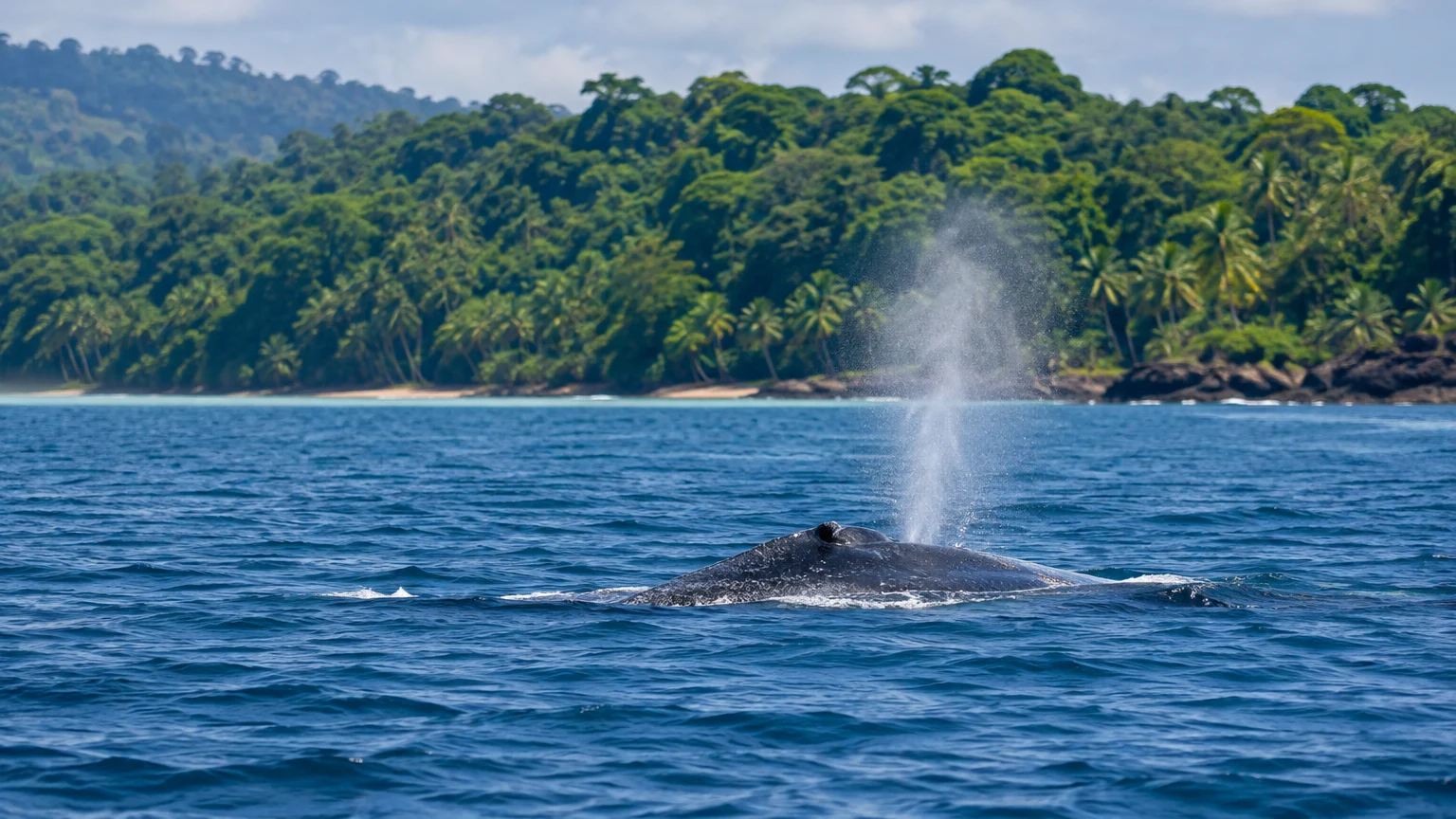
Where to see whales in Costa Rica?
Costa Rica’s Pacific coast welcomes humpback whales during several migration periods. The Costa Rican Tourism Institute mentions sightings from December to March and from July to September, with variations depending on the area and the year. The International Whaling Commission describes seasonal movements of humpback whales in Costa Rica.
Where to look for whales in Costa Rica?
Uvita and Ballena Marine Park are a well-known area for this type of trip, though not the only one. A favorable season improves your chances; it does not turn the sea into an aquarium.
Choosing a trip that respects the animals
Check the captain’s experience, the number of passengers, life jackets, safety instructions, and the planned behavior around cetaceans. A reputable company will not promise to chase a group to exhaustion to get the perfect photo. Local approach rules must take priority over your desire for a picture. Also ask about sea conditions and the possibility of rescheduling the excursion.
Don’t plan a trip around a single morning
If whale watching is your main dream, book several nights in a suitable area. You may be able to reschedule the trip if the weather requires it. Do not schedule a boat excursion just before a long road transfer or a flight. Waiting at sea, the sun, and the movement of the boat are more tiring than an appealing description might suggest.
Putting together your marine itinerary
Note the exact departure port, meeting point, cancellation policy, and clothing instructions. Round it out with a beach itinerary, a local discovery, or a walk on land. The trip can still be a success even if the whales decide to keep their distance.
In practice: choosing a responsible boat trip
A family with two young children may prefer to watch dolphins and birds on a shorter coastal trip rather than choose the longest “whale” excursion. Ask about the time spent at sea, wave conditions, life jackets, and restrooms on board. Price alone is not enough to judge a boating service, and the weather may require everything to be postponed.
A responsible approach to boat trips
A captain should be able to explain the duration, return conditions, safety on board, and how the crew behaves around animals. Ask whether departures are suitable for young children and people prone to seasickness. The price may include transportation, a drink, or equipment, but only the provider’s listing can confirm this. Whales migrate over long distances: no tourist map can make them appear in front of your boat at your chosen time.
Book a boat trip, not a guaranteed encounter
These guidelines help you choose a region, but they do not constitute a promise for a particular morning. Compare trips based on the boat, duration, supervision, and how the provider respects the animals.
| Criterion | Useful question |
|---|---|
| Departure | Exact port or beach and boarding conditions |
| Comfort | Shade, seating, restrooms, and equipment available |
| Group | Number of passengers and accommodations for children |
| Wildlife watching | Approach rules, behavior, and absence of a guarantee |
| Weather | Cancellation decision and financial terms |
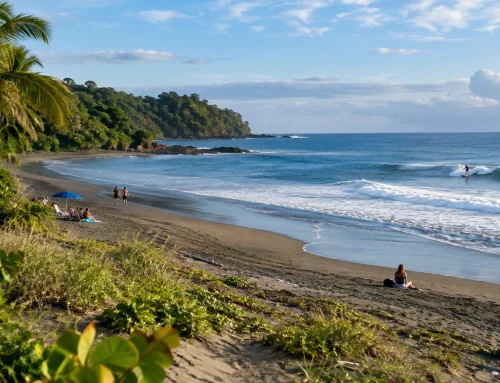
For a stop in Uvita, keep a land visit to Marino Ballena as a separate plan. The shape of the tombolo and a wildlife-watching excursion satisfy two different interests. You can enjoy the coastline even if sea conditions prevent the planned trip.
Whales: distinguish the season when they are present from the possibility of a trip
On the South Pacific coast, the area around Uvita and Ballena Marine Park is often associated with whale watching. But migration timing, sea conditions, and departure permits vary. A season described as favorable guarantees neither an encounter on the day of your excursion nor a boat departure when the weather is bad.
Before booking, ask the operator how long the trip lasts, what boat is used, what approach rules are followed, and what happens if conditions do not allow departure. Choose a team that respects the animals and does not promise to speed in as close as possible for a photograph. With young children or people prone to seasickness, comfort and safety conditions deserve as much attention as the chances of a sighting.
Keep a flexible day in the area. A walk along the coast, some wildlife watching from land, or another nature activity can replace a postponed excursion. That way, you can still have an interesting stay even if the whales decide to pass by elsewhere.
Frequently asked questions
 Numa Costa
The pen name under which I publish my articles and develop my editorial websites. Curious by nature, I enjoy understanding how things work, exploring everyday questions and making information easier to understand and use.
→ Learn more about the author